GrowOperative
Mobile-first UX design and full-stack application development for a peer-to-peer produce and goods exchange app.
The Brief
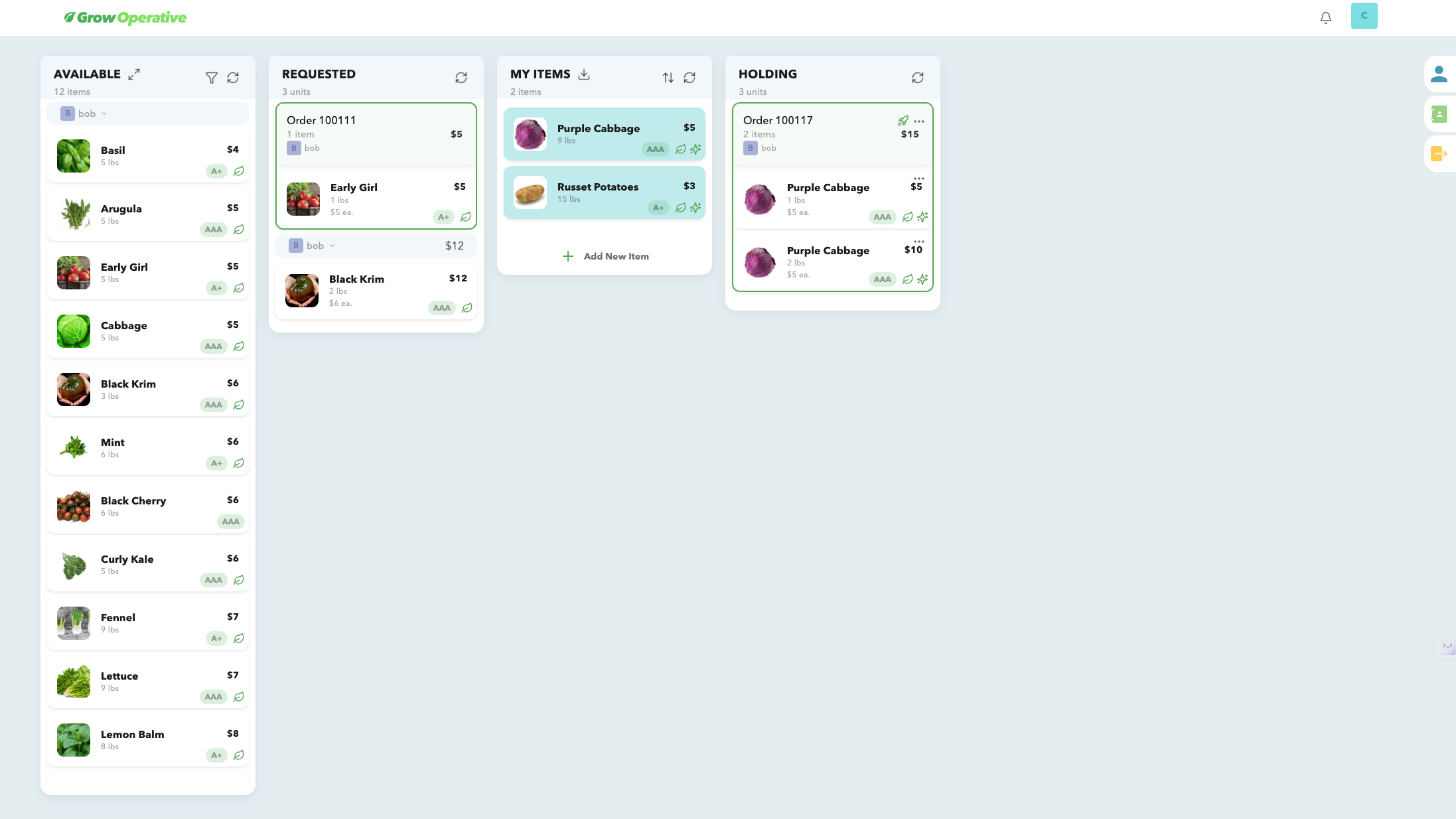
GrowOperative is a mobile app for trading garden produce, homegrown goods, and small-batch food locally. The design problem: trading between neighbours isn't buying from Amazon. It's informal, trust-based, and the stakes are low. An interface that felt like a marketplace would be wrong for the context. We needed something that felt like a community board, not a storefront.
Design
We produced the full UX and visual design, covering the complete product experience.
- User flows for listing, discovering, and arranging exchanges
- Trust signal design within a contact network: showing someone is vouched for, without formal ratings that feel out of place between neighbours
- Mobile-first UI built for outdoor use — readable in sunlight, operable with one hand
- Visual identity and iconography
Development
We built GrowOperative on a decentralized infrastructure for community-based economies: a system where people trade goods, services, and labour through trusted contact networks using mutual credit instead of cash. The first application targets local food exchange, with the architecture built to extend as the network grows.
- Trust-based contact network: connections propagate through the network the way trust actually works between people (friend of a friend)
- Mutual credit system: participants earn and spend credit through the network, settling accounts through goods and services rather than fiat currency
- Supply chain tracking: trace goods from producer to recipient, building transparency into every exchange
- PWA frontend: installable on mobile without an app store
- Blockchain integration: Radix network migration planned for ledger transparency and automated settlement
The project started with Novadiem leading a small development team. It later moved to a single-developer model using AI-assisted practices — faster, and with more coherent code.
What This Shows
Peer-to-peer trade between neighbours is a genuinely different interaction model from e-commerce. There's no seller reputation system, no returns policy, no customer support. The trust has to come from the network itself. Designing for that — and building the data architecture that supports it — required thinking about the product differently from the start.